
Thomas Chilton
Date of birth: 1894
Date of death: 27.9.1916
Area: Normanton
Regiment: Royal Garrison Artillery
Family information: Son of Thomas and Mary Ann Chilton
Rank: Gunner
Service number: 5834
War Service
Thomas’s full service record is not available, however according to the list of “United Kingdom, Soldiers Died in the Great War, 1914 – 1919” Thomas enlisted at Wakefield joining the 149 Wakefield Heavy Battery. Sometime later the 149 Wakefield Heavy Battery became part of the Royal Garrison Artillery.
The telegram boy would again bring distressing news to Charles Street less than two weeks after Mrs Bradley, who lived at number 8, had received the sad news of the loss of her husband. Thomas’s family, at number 4, would learn of the loss of Thomas, killed in action in France on 27 September 1916, whilst serving in the 2nd/1st (North Midland) Heavy Battery.
Thomas now lies in the Hebuterne Military Cemetery, France. The village of Hebuterne endured considerable shellfire during the Battles of the Somme, but the cemetery was in use at various times during the war by fighting units and Field Ambulances.
Family Life
Thomas was born in Altofts in 1894. His parents, Thomas and Mary Ann Chilton, were natives of Shropshire and they moved to Altofts early in their marriage. Home was at 17, Albert Terrace, Altofts. Thomas (senior) worked as a hewer at the local mine, probably Pope and Pearsons. By the year 1901 the family had increased. Thomas, now age 7, lived with his parents, older sister Sarah Jane and brother William who were both born in Altofts. There were more changes in the family during the next decade. Thomas’s sister Madge was born in 1908 and by 1911 the family had moved from Albert Terrace to 4, Charles Street, Altofts. Thomas followed his father to work in the mine where Thomas was employed as a pony driver. It is not hard to imagine how a lad of 20 years of age and working down a mine could be seduced to join Kitchener’s Army in 1914 with the surge of patriotism and the need to “do your bit” prevalent at the time. A chance to leave a dreary life in the mine for the possibility of going overseas must have seemed a good alternative. After all, they said “The war would be over by Christmas”.
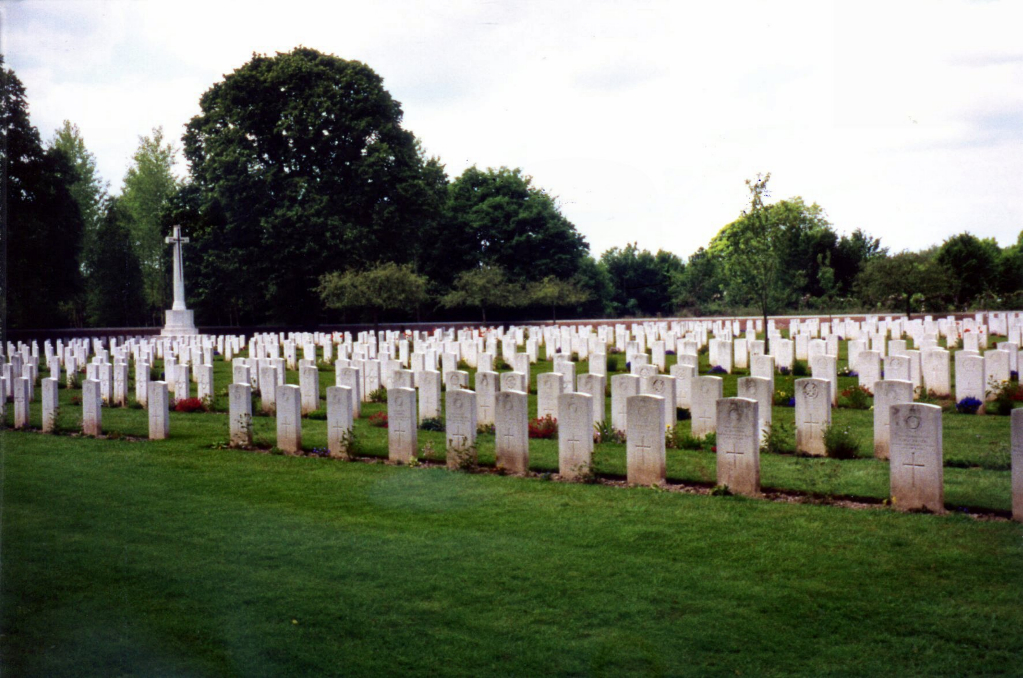 Hebuterne Military Cemetery